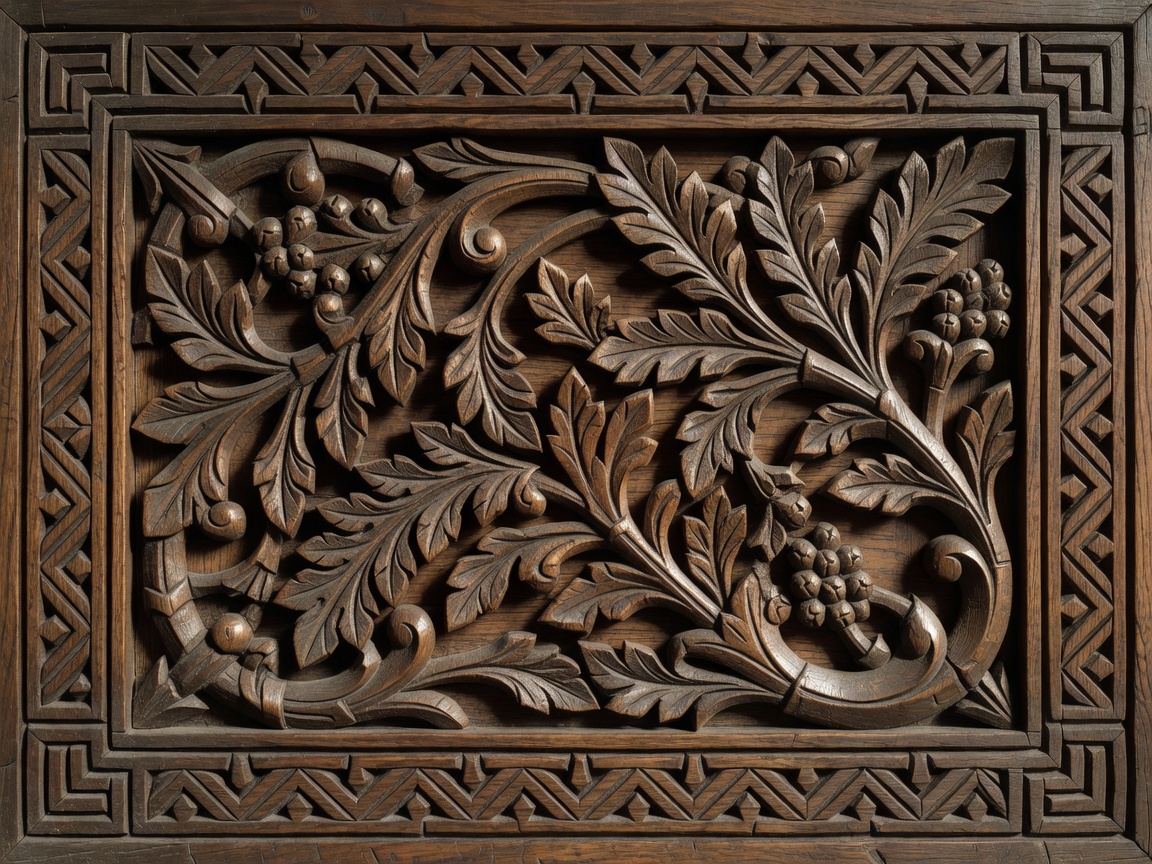
Regional carving takes shape through available timber, building practices, religious art, household needs, climate, trade and the tools people could maintain. These influences cross present-day borders. A useful atlas therefore describes overlapping areas and historical exchange rather than assigning every motif to one nation.
Alpine and Central Europe
Across Alpine Europe, wood has served buildings, household objects, devotional images and rural craft. Coniferous timber is common in many upland landscapes, while local species and supply vary by valley and altitude. Architectural settings can favour carved brackets, panels, doors and interior details. Religious sculpture and domestic decoration also form part of the wider regional picture.
Central European traditions are similarly varied. Town workshops, rural production, church interiors and domestic objects created different needs. Carved ornament may sit alongside joinery and architectural work. Stylistic exchange moved through trade routes, migration, religious institutions and changing political boundaries. It is inaccurate to treat a broad regional style as exclusive to a modern state.
Scandinavia and the Baltic
Scandinavian carving includes architectural ornament, household objects and decorative forms shaped by local practice and changing historical influences. Climate, timber availability and building methods affected what was practical. Carving might articulate a building, mark a useful object or add pattern to an everyday surface.
The Baltic region connects northern and eastern European traditions through trade, settlement and shared material histories. Birch, alder, pine and other local woods may be relevant depending on place and object. Regional forms should be read alongside domestic craft, architecture and neighbouring traditions rather than isolated as a single style.
Balkans and Eastern Europe
The Balkans bring together varied religious, domestic and architectural contexts. Carved work can appear in interiors, furnishings, doors and household objects. Orthodox, Catholic, Islamic and other cultural histories have shaped different settings over time. The region is not culturally uniform; local practice and historical contact matter more than a simplified label.
Eastern Europe encompasses a broad range of languages, climates, timber resources and craft histories. Rural traditions, religious imagery, architectural ornament and trade have each contributed to the forms found across the region. Some patterns travel; others belong to a specific object or community context. Avoid presenting shared motifs as proof of one exclusive origin.
Iberian, Mediterranean and British traditions
Across the Iberian Peninsula, carved architectural details, religious art, furniture and domestic objects reflect distinct local histories. Climate and species differ between coast, interior and upland areas. Workshop practices also changed with urban demand, patronage and contact across the peninsula and beyond.
Mediterranean Europe is a connected zone, not a single carving school. Architecture, religious commissions, maritime trade and urban craft shaped local work in different ways. Timber supply could involve local species or traded material. The British Isles likewise contain regional practices tied to buildings, furnishings, ecclesiastical settings and rural life. These histories include movement of forms and makers across borders and seas.
How to compare traditions
- Start with the object: building detail, devotional image, tool, furniture component or household vessel.
- Ask which timber and construction methods support the form.
- Separate documented historical context from a modern interpretation of a motif.
- Check whether a form is local, shared across a region or adapted through exchange.
- Use careful geographic wording when a tradition crosses present-day borders.
Regional comparison has clear advantages: it connects carving to use, environment and social context. Its limitation is the risk of flattening local difference into a tidy map. Treat regional groupings as orientation, then look for specific object histories, dates and communities before making precise claims.
Good for
Use the regional lens when researching a pattern, architectural detail or object type. It helps place a carving within wider material and cultural relationships.
What to know
Modern national boundaries do not define the full history of European craft. Motifs and methods travel, change and acquire new meanings.